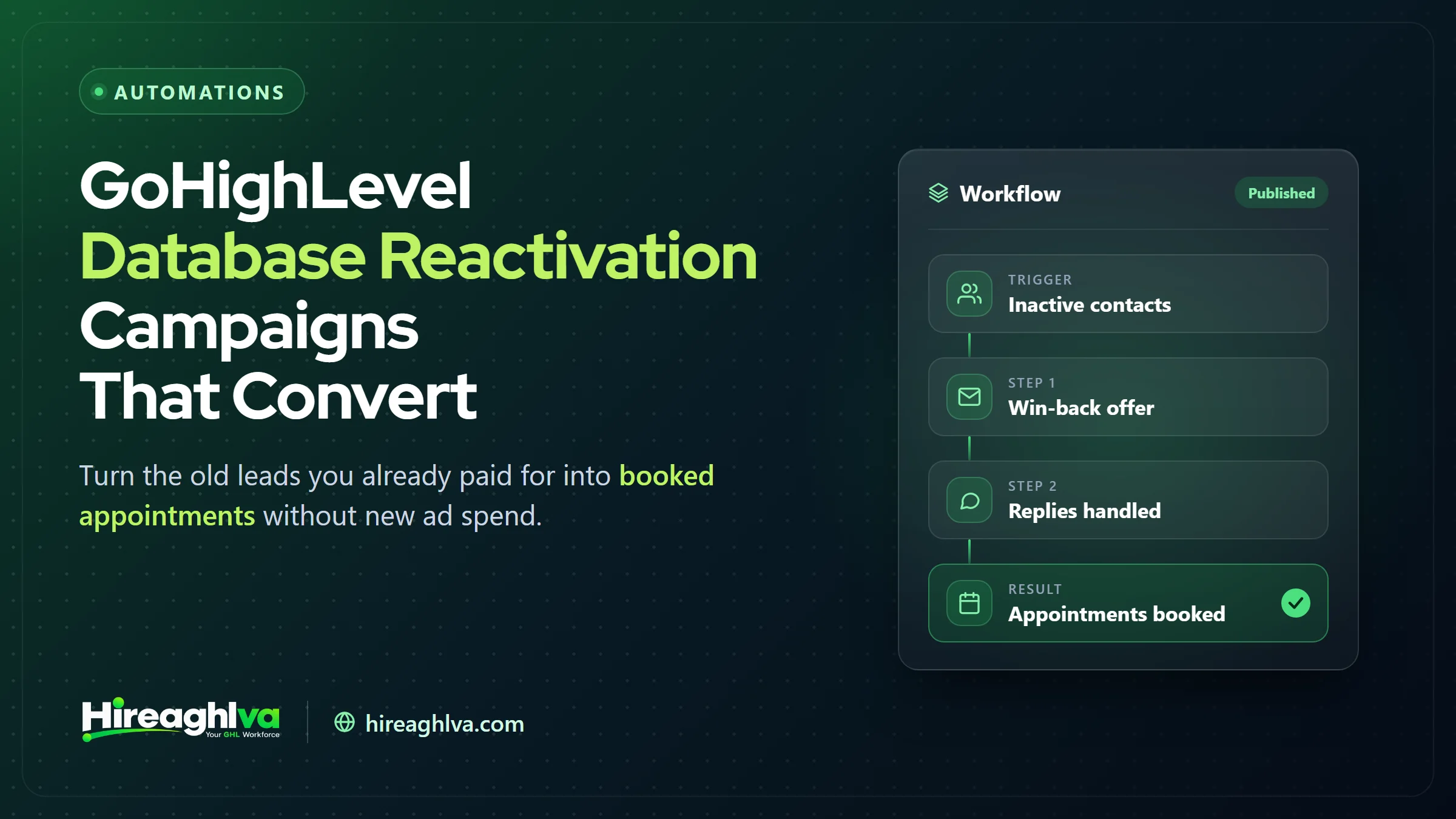
Most Dallas mortgage brokers are sitting on a CRM full of leads that didn’t disappear — they lost momentum at a specific moment, often because the timing wasn’t right, and a structured 12-month nurture and reactivation sequence is how that already-paid-for list turns back into closed loans. The follow-up research on this is stark: contacting a lead six times raises the odds of eventually closing that prospect to roughly 93%, yet half of all brokers never attempt a second call.
By the numbers: 40% of new mortgage leads are never contacted at all, and fewer than 2% receive a call within the first hour (National Mortgage Professional). After one call, 50% of brokers never try again, even though six contacts raise the odds of closing to roughly 93% (LeadGenJay). A patient, well-segmented nurture sequence — not more lead spend — is usually the fastest way to close that gap.
Every Dallas mortgage broker’s CRM has the same hidden asset sitting untouched: a long list of contacts who inquired six months ago, never closed, and never heard from the broker again. Most of those leads didn’t lose interest — they lost momentum at a specific moment, often for reasons that have since changed.
How many mortgage leads never get followed up?
About 40% of new mortgage leads are never contacted at all, and fewer than 2% receive a call within the first hour, according to a speed-to-contact study (National Mortgage Professional, 2026). The scale of the follow-up problem in mortgage is larger than most brokers assume. Separately, after one phone call, 50% of brokers never attempt to reach that lead again — even though research shows contacting a lead six times raises the odds of eventually converting them to roughly 93% (LeadGenJay, 2026 mortgage follow-up data).
40%
Of new mortgage leads are never contacted at all
<2%
Receive a call within the first hour of inquiring
93%
Estimated close probability after six follow-up touches
| Item | Value |
|---|---|
| Called within the first hour (under 2%) | 2% |
| New leads never contacted at all | 40% |
| Brokers who stop after one call | 50% |
| Close odds after six contacts | 93% |
Source: National Mortgage Professional (2026); LeadGenJay (2026)
These figures are industry-wide mortgage lead-response benchmarks, not Dallas-specific — treat the exact percentages as directional. The consistent finding across the sources cited here is that follow-up persistence, not lead quality or pricing, is where most brokers leave conversions on the table.
Why do mortgage leads go cold?
Mortgage leads usually go cold because of rate shopping and shifting timelines, not lost interest — a mortgage inquiry is rarely a one-and-done decision the way a home service call-out often is. A prospect might request quotes from three or four brokers in the same week, then pause the whole process for months while they save for a larger down payment, wait for their credit to improve, or simply get busy. The average lender takes 42–47 hours to respond to a new lead in the first place (LeadGenJay, 2026), which means a lot of “cold” leads were never actually engaged properly to begin with — they went cold from neglect, not genuine disinterest. Closing that first-response window is its own fix, covered in our speed-to-lead automation guide for GoHighLevel.
42–47 hrs
Average lender response time to a new lead
6+
Follow-up touches to plan across the first 30–60 days
12 months
Nurture sequence length, tapering from weekly to monthly
What does a mortgage reactivation sequence look like?
A structured mortgage reactivation sequence follows up six or more times across the first 30–60 days, segments leads by purchase vs. refinance intent, triggers a distinct reactivation sequence at six months of silence, and routes any reply instantly to a human.
Follows up 6+ times across 30–60 days
- With structured nurture
- Without it (1–2 attempts, then stop)
Segments by purchase vs. refinance intent
- With structured nurture
- Without it (1–2 attempts, then stop)
Triggers a distinct reactivation sequence at 6 months
- With structured nurture
- Without it (1–2 attempts, then stop)
Routes any reply instantly to a human
- With structured nurture
- Without it (1–2 attempts, then stop)
Relies on someone remembering to follow up
- With structured nurture
- Without it (1–2 attempts, then stop)
| With structured nurture | Without it (1–2 attempts, then stop) | |
|---|---|---|
| Follows up 6+ times across 30–60 days | ||
| Segments by purchase vs. refinance intent | ||
| Triggers a distinct reactivation sequence at 6 months | ||
| Routes any reply instantly to a human | ||
| Relies on someone remembering to follow up |
- Segment by what they originally asked about. Purchase vs. refinance, rate type, and rough loan amount should all shape what the nurture sequence actually says — a generic “still thinking about a mortgage?” message ignores context you already have.
- Start with active, frequent follow-up. The first few weeks after an inquiry are when a prospect is most likely still actively comparing options, and this is where most of the six-touch follow-up should be concentrated.
- Taper to lighter, value-driven touches — a rate update, a market note, a relevant tip — rather than a repeated hard ask once the active window has passed.
- Trigger a distinct reactivation sequence for contacts who’ve gone fully quiet for six-plus months, framed as a genuine check-in rather than a continuation of the original pitch — the same approach behind our GoHighLevel database reactivation campaigns.
- Route any response instantly to a human, since a reactivated lead replying after months of silence is a strong buying signal that deserves immediate, not queued, attention.
Why this pairs with a properly built pipeline, not just a sequence
A nurture sequence only works if the underlying pipeline actually tags and segments contacts correctly in the first place — without that structure, “6 months inactive” isn’t a trigger anyone can build against. This is exactly the kind of foundational setup a prebuilt snapshot or a proper automation build-out handles, rather than trying to bolt a nurture sequence onto an account with no consistent tagging underneath it.
What to measure once the sequence is live
A reactivation program that isn’t measured is easy to assume is working when it isn’t. Track reply rate on the initial reactivation touch (a strong signal of how much genuinely recoverable interest is in the list), median time from reply to human follow-up (this should be minutes, not hours, given how motivated a reactivated lead already is), and the percentage of the 6-month-plus inactive list that re-enters active pipeline each quarter. A broker running this consistently typically finds a meaningful share of “dead” contacts were simply never followed up with persistently enough the first time.
TCPA compliance: the part brokers most often get wrong
A nurture sequence that ignores TCPA (Telephone Consumer Protection Act) requirements isn’t just a legal risk — it’s a genuinely expensive one. Violations can carry fines up to $500 per negligent violation and $1,500 per willful violation, per text message sent (ActiveProspect, 2026 TCPA compliance guide). A few requirements every mortgage nurture sequence needs to satisfy:
- Prior express written consent for marketing texts to a cell phone — the consumer must be clearly and visibly told they’re agreeing to receive automated messages, not have that buried in dense terms of service.
- A working opt-out in every message, typically “Reply STOP to unsubscribe,” honored immediately and permanently once received.
- A2P 10DLC campaign registration, the carrier-level system that registers your business and specific messaging use case (see our complete guide to A2P 10DLC) — sending unregistered bulk marketing texts increasingly gets filtered or blocked outright by carriers, independent of the legal risk.
- Centralized platform use, not personal-device texting. A 2026 industry study found only about a third of loan officers exclusively use an approved central platform for SMS, meaning the majority are texting from personal devices in ways that are harder to track, audit, and keep compliant (National Mortgage News, cited via Verse.ai).
$500–1,500
Potential fine per violation, per text message sent
~1 in 3
Loan officers exclusively using an approved central texting platform
Building a nurture sequence inside GoHighLevel with proper consent capture and centralized sending isn’t just cleaner — it directly addresses the compliance gap most of the industry is currently exposed to.
A sample nurture sequence, month by month
To make the 12-month structure concrete, here’s roughly how message tone and frequency should shift over the sequence for a purchase-intent lead who went quiet after an initial rate quote:
Weeks 1–4 (active follow-up): “Hi [Name], following up on the rate quote we sent for [property type] — happy to answer any questions or run updated numbers if your timeline has shifted. What’s the best way to reach you?” — sent weekly, referencing the specific inquiry.
Months 2–3 (regular check-in, tapering): “Rates have moved a bit since we last spoke — want me to send an updated quote based on where things stand now?” — biweekly, framed around new information rather than repeating the same ask.
Months 4–8 (light-touch value content): “Quick market note: [relevant rate trend or local housing data]. Let me know if you’d like to revisit numbers whenever the timing’s right — no pressure.” — monthly, positioning the broker as a helpful resource rather than a repeated sales pitch.
Month 9+ (reactivation trigger): “Hi [Name], it’s been a while — just checking in to see if a home purchase or refinance is still on your radar. If timing’s changed, no worries at all, just let me know either way.” — a genuine, low-pressure check-in rather than a continuation of the original pitch.
The 12-month mortgage nurture sequence at a glance (purchase-intent lead)
| Stage | Cadence | Message focus |
|---|---|---|
| Weeks 1–4: active follow-up | Weekly | Reference the specific rate quote; offer to answer questions or rerun numbers |
| Months 2–3: regular check-in | Biweekly | New information, such as an updated quote after rates move |
| Months 4–8: light-touch value | Monthly | Market notes and helpful content; revisit numbers when timing is right |
| Month 9+: reactivation | Low-pressure check-in | Ask whether a purchase or refinance is still on their radar |
| Any reply, any stage | Immediately | Route instantly to a human loan officer |
Segmenting nurture by credit and pre-approval status
Beyond purchase-vs-refinance intent, a mortgage nurture sequence performs meaningfully better when it also accounts for where a prospect actually sits in their readiness to move forward. A lead who’s already pre-approved and actively house-hunting needs a very different cadence than one who inquired out of general curiosity with no pre-approval and a vague six-month timeline.
A practical three-tier segmentation:
Pre-approved, actively searching: the highest-priority tier, warranting the most frequent touches and immediate human follow-up on any reply, since this prospect could realistically close within weeks.
Credit or down-payment still in progress: a medium-priority tier suited to educational content (credit-improvement tips, down-payment assistance program information) alongside standard rate check-ins, since the realistic timeline is months rather than weeks.
Early-stage / just researching: the long-tail tier, best served by the lightest-touch monthly value content, since aggressive follow-up here tends to feel premature and can actually push a prospect toward disengaging entirely before they’re ready to seriously engage.
Building this segmentation requires capturing the right qualifying information at the point of initial inquiry — a form on your mortgage broker website or an intake call that asks about pre-approval status and timeline up front gives the automation what it needs to route correctly from day one, rather than treating every new lead identically until a broker manually reclassifies them later.
Connecting nurture automation to loan origination software
Most mortgage brokers already run a loan origination system (LOS) for the actual application and underwriting process, separate from whatever CRM handles top-of-funnel nurture. The disconnect between the two is often where reactivated leads fall through a second time: a prospect responds to a nurture text, gets handed to a loan officer, and then the CRM has no visibility into whether that handoff actually turned into a started application. A properly connected setup pushes key LOS milestones (application started, documents requested, conditional approval) back into GoHighLevel, so the nurture sequence can pause automatically once a lead has moved into active processing, rather than continuing to send generic “still thinking about a mortgage?” messages to someone who’s already mid-application with your team.
Rate-environment sensitivity in nurture messaging
Mortgage nurture content ages faster than most other industries’ follow-up sequences because the underlying rate environment genuinely changes the value of the message. A nurture email referencing a specific rate from three months ago isn’t just stale — it can actively damage trust if a prospect notices the number no longer reflects reality. Building the sequence with this in mind means favoring templated language that references “current rates” and directs to a live quote rather than hardcoding a specific number into evergreen automation content, and setting a recurring reminder to review and refresh any rate-specific messaging at least monthly, since a sequence built once and left untouched for a year will eventually contradict itself in ways an attentive prospect will notice.
Common mistakes brokers make with follow-up and nurture
- Giving up after one or two attempts. Given that six touches is associated with a 93% close probability, stopping at attempt one or two — which half of all brokers do — leaves most of the achievable conversion on the table before the sequence ever had a chance to work.
- Sending the same message to every segment. A purchase-intent lead and a refinance-intent lead are thinking about completely different things; a generic nurture sequence ignores context the broker already collected at intake.
- No hard trigger for reactivation. Without a defined “6 months of silence” rule built into the CRM, a lead simply fades out of anyone’s attention rather than automatically re-entering a structured sequence.
- Treating a reply to a reactivation text like routine correspondence. A lead responding after months of silence is a strong buying signal and deserves the same urgency as a brand-new lead — routing it into a slow queue instead of an instant human handoff wastes exactly the moment the reactivation worked.
A simple gut check: pull ten contacts marked “dead” or “cold” in your CRM right now and check how many follow-up attempts they actually received before being marked that way. Most brokers are surprised to find the number is one or two, not six.
Bringing it together
The most expensive leads in a mortgage broker’s business aren’t the ones that never converted — they’re the ones sitting untouched in the CRM after already being paid for once. A properly segmented, patiently paced nurture and reactivation sequence, built around the six-touch follow-up pattern the data actually supports, is how a Dallas broker turns that existing list back into closed loans without spending another dollar on new lead generation. In a rate environment that keeps shifting prospects’ timelines, the broker with a system built to catch and re-engage those shifts automatically will consistently out-close one relying on memory and good intentions to follow up a sixth time. The list is already paid for — the only remaining cost is building the sequence that finally follows through on it.
Written by the Hireaghlva GoHighLevel team
We build and run GoHighLevel accounts, automations, dashboards, and websites for agencies and local businesses across the US and Canada. This guide reflects that hands-on work, with sources cited inline where we reference outside data. Last reviewed September 13, 2026.